Recovery Gear 101: The Equipment That Gets You Home
If you spend enough time off-road, getting stuck isn’t a matter of if—it’s a matter of when. Mud, sand, rocks, snow, and slick terrain eventually humble everyone. The difference between a minor inconvenience and a dangerous situation often comes down to having the right recovery gear and knowing how to use it safely. At Lunes Off-Road, we regularly see recovery gear damaged, misused, or outright dangerous because people learned from social media instead of proper recovery practices. Here’s a breakdown of the most common recovery equipment and how it should be used.
Kinetic Recovery Rope
A kinetic rope (sometimes called a snatch rope) is designed to stretch under load and use stored energy to help pull a stuck vehicle free.
Unlike a tow strap, a kinetic rope stretches and rebounds.
Best Used For:
Mud
Sand
Snow
Vehicles stuck with spinning tires
How It Works:
The recovery vehicle gains slight momentum while the rope stretches. As the rope contracts, it transfers energy smoothly into the stuck vehicle.
Important Rules:
Use only rated recovery points.
Never attach to trailer balls.
Never use with damaged recovery points.
Inspect for cuts, abrasion, or fraying before use.
Follow manufacturer weight ratings.
Common Mistake:
Using a kinetic rope like a tow strap. They are different tools for different jobs.
Tow Straps / Recovery Straps
A recovery strap does not stretch like a kinetic rope.
Its purpose is to:
Tow a disabled vehicle
Provide steady pulling force
Assist winch recoveries
Best Used For:
Controlled pulling
Vehicle towing
Winch extensions
Not Intended For:
High-speed recovery yanks
Trying to perform a kinetic recovery with a non-stretch tow strap can create extreme shock loads on recovery points and vehicle components. We have seen this often misused at a kinetic rope which leads to strap failure. Sometimes that can look like a hard recovery D-ring flying back at the recovery or disabled vehicle and can be a life threatening scenario. DO NOT USE A TOW STRAP AS A KINETIC ROPE.
Soft Shackles
Soft shackles have become incredibly popular for good reason.
They are:
Lightweight
Strong
Easy to store
Safer than steel when used correctly
Advantages:
No metal-to-metal contact
Float in water
Less likely to become dangerous projectiles if something fails
Best Practices:
Inspect before every use.
Keep away from sharp edges.
Use protective sleeves when needed.
Follow manufacturer load ratings.
Common Mistake:
Running soft shackles directly against sharp steel recovery tabs.
Hard Shackles (D-Rings)
Traditional steel shackles remain a valuable recovery tool.
Advantages:
Durable
Resistant to abrasion
Useful with steel recovery points
Best Practices:
Tighten finger-tight, then back off approximately a quarter turn.
Inspect pins regularly.
Replace damaged or bent shackles immediately.
Common Mistake:
Using cheap imported shackles with unknown ratings.
Recovery gear is not the place to save money.
Recovery Dampers & Weighted Line Blankets
A weighted line blanket is designed to reduce recoil if a winch line or recovery connection fails.
When To Use:
Winch recoveries
Long cable pulls
High-load situations
Place the damper near the middle of the line.
If a failure occurs, the weight helps absorb energy and reduces line whip.
Important Note:
Modern synthetic winch rope stores significantly less energy than steel cable, but dampers are still recommended whenever possible.
Recovery Gloves
Gloves are one of the cheapest and most overlooked pieces of recovery equipment.
Why They Matter:
Protect hands from steel cable splinters
Protect against abrasion
Improve grip in mud and rain
Reduce rope burn
Especially Important For:
Steel winch cable users
Long winch pulls
Tree saver handling
Snatch Blocks
A snatch block is a pulley designed to change pulling direction or increase pulling power.
Benefits:
Doubles mechanical advantage
Reduces winch load
Allows angled recoveries
Improves control
Example:
A 10,000 lb winch with a properly rigged double-line pull can effectively generate significantly more pulling force while reducing strain on the winch.
Common Uses:
Deep mud recoveries
Rock crawling recoveries
Recoveries where a straight pull isn't possible
Snatch Blocks(Rings) for Synthetic Rope
If running synthetic rope:
Look For:
Synthetic rope-compatible sheaves
Smooth surfaces
No sharp edges
Synthetic rope is stronger pound-for-pound than steel cable but can be damaged by abrasion.
Inspect the pulley before every use.
Snatch Blocks for Steel Cable
Steel cable places different demands on the pulley.
Requirements:
Proper groove dimensions
Heavy-duty construction
Adequate load ratings
Using the wrong pulley can damage cable strands and significantly reduce cable life.
Winch Basics
A winch is one of the most valuable recovery tools you can install on an off-road vehicle.
The winch creates controlled pulling force when traction alone isn't enough.
Before Every Pull:
Inspect rope or cable.
Check battery condition.
Verify all connections.
Confirm recovery points are properly rated.
During Recovery:
Keep spectators clear.
Use a damper when possible.
Maintain communication between spotters and drivers.
Pull slowly and steadily.
Avoid:
Shock-loading the winch.
Jerking the cable.
Side-loading the drum.
Pulling over sharp edges.
Recovery Point Selection Matters
The strongest rope in the world cannot compensate for a weak attachment point.
Never Use:
Trailer hitch balls
Tie-down loops
Suspension components
Bumpers not designed for recovery
Use:
Rated recovery points
Recovery bumpers
Proper hitch receivers with recovery inserts
A failed recovery point can become a lethal projectile.
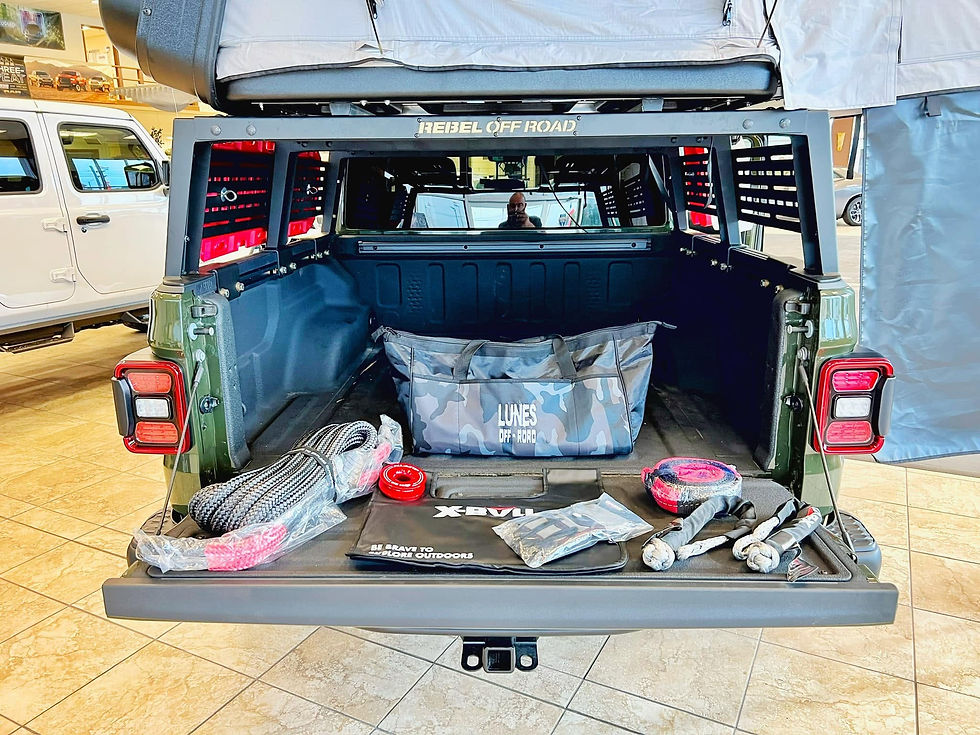
Build a Basic Recovery Kit
Every off-road vehicle should have:
✅ Kinetic recovery rope
✅ Tow strap
✅ Soft shackles
✅ Hard shackles
✅ Recovery gloves
✅ Winch line damper
✅ Tree saver strap
✅ Snatch block
✅ Air compressor
✅ Winch
You don't need the most expensive gear on the market.
You need quality equipment, proper ratings, and the knowledge to use it safely.
Final Thoughts
The best recovery is the one you never need. Good tire placement, proper spotting, appropriate tire pressure, and smart driving will prevent more recoveries than any piece of gear ever will. But when things go sideways, recovery gear is not the place to cut corners. A quality winch, properly rated straps, reliable shackles, and safe recovery practices can be the difference between a great trail story and an expensive trip home. At Lunes Off-Road, we'd rather help you build a recovery kit before you need it than repair the damage after a recovery gone wrong.


Comments